Startup Battlefield: A Premier Pitch Competition
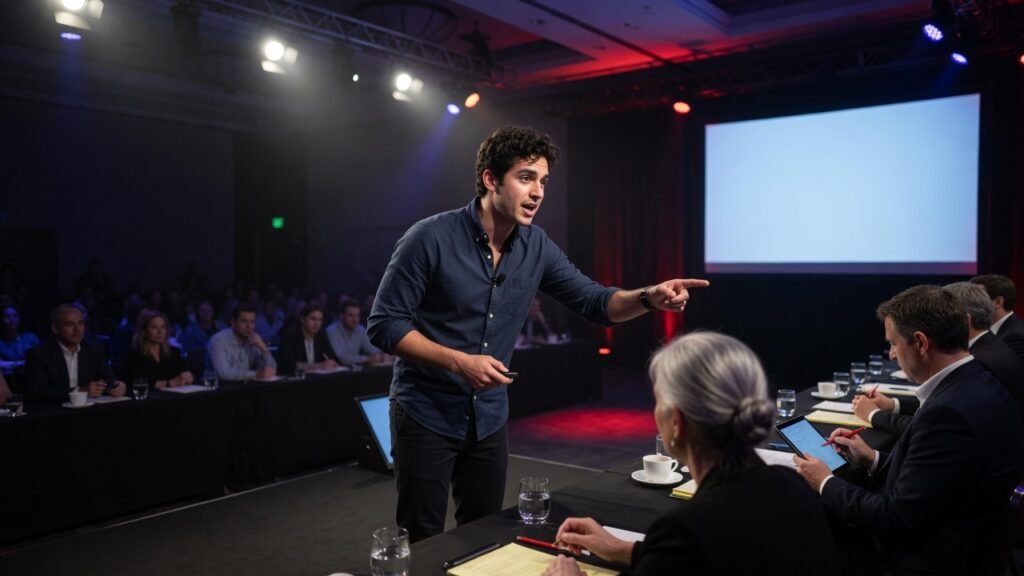
Startup Battlefield is a high-pressure, high-reward pitch competition that delivers exceptional media exposure, mentorship, and investor access for early-stage startups with validated traction.
Startup Battlefield is not a startup launchpad — it is a crucible. Founders who walk onto that stage are not attending a networking mixer; they are submitting their company to a stress test that has produced some of the most scrutinized debuts in tech. For investors, the competition functions as a live due diligence filter, compressing months of evaluation into six minutes of pitch followed by a barrage of questions from judges who have no incentive to be polite. This is the arena where Dropbox, Cloudflare, and Yammer first demonstrated their products to a skeptical audience. The format has remained deliberately punishing: 20 finalists, six minutes each, no slides with more than bullet points, and a Q&A session where vague market sizing gets dismantled in real time. The official TechCrunch Disrupt page archives every finalist pitch, creating a permanent record that venture capitalists reference years later during Series B diligence.
The Architecture of a High-Stakes Pitch
The structural demands of Startup Battlefield expose weaknesses that polished pitch decks conceal. Each team receives exactly six minutes to present their business — no exceptions, no grace period. The clock runs relentlessly on a visible timer, and the microphone cuts off at 6:00 precisely. This constraint forces a discipline that most accelerator demo days actively avoid. The Q&A segment that follows is where the real filtering happens. Judges — typically a rotating panel of venture capitalists, former founders, and industry operators — receive no briefing beforehand. They react to the pitch in real time, asking questions about unit economics, technical architecture, and competitive moats. A PitchBook analysis of past winners shows that companies surviving this interrogation tend to raise Series A rounds 40% faster than the median venture-backed startup. What separates Battlefield from every other pitch competition is the prohibition on video demos. Products must work live on stage. The protocol is unforgiving: if your API call fails, your demo fails. If your Wi-Fi drops, you present without visuals. This requirement alone eliminates companies that have not stress-tested their infrastructure under conference hall conditions — a surprisingly common failure mode even among well-funded teams. The bandwidth constraints of a convention center network become a de facto technical interview. Founders who understand latency and throughput build fallback architectures. Those who do not learn the lesson publicly. Several past participants have described the experience as more technically demanding than their Y Combinator interviews, precisely because the demo cannot be faked.
What the Data Says About Outcomes
The track record is not merely impressive — it is statistically anomalous for an event that charges no equity to participate. Since the competition launched, Startup Battlefield alumni have collectively raised over $9 billion in follow-on funding. More than 100 exits have occurred, including IPOs and acquisitions by companies such as Google, Microsoft, and Salesforce. The survival rate tells a sharper story. While roughly 90% of venture-backed startups fail within a decade, Battlefield finalists show a materially different trajectory. Cloudflare, which presented in 2010, now operates a global network spanning more than 300 cities with annual revenue exceeding $1.2 billion. Dropbox, a 2008 finalist that did not even win its cohort, went public at a $9.2 billion valuation. Yammer sold to Microsoft for $1.2 billion four years after appearing on stage. This matters because the selection process does not rely on pedigree. The application review involves a blind technical evaluation of the product, not the founding team’s credentials. That framework produces a finalist pool that is measurably more diverse by founder background than the venture industry average. The implication for investors is straightforward: the Battlefield filter catches signal that traditional sourcing methods miss. For founders handling the early stages of building a company, understanding what makes a pitch competition effective is as important as the pitch itself. The same principles that apply to evaluating brand identity tools for new ventures also apply here — specificity and clarity outperform vague promises every time.
The Investor Perspective: Live Due Diligence
Venture capitalists attend Startup Battlefield for a reason that has nothing to do with the $100,000 prize. The equity-free grant is a rounding error in the context of the funding rounds that follow. What investors are actually buying is a front-row seat to the most intense product demonstration they will see all year. The live Q&A functions as a proxy for boardroom dynamics. Judges who interrupt with pointed questions about customer acquisition cost or gross margins are simulating the pressure that founders will face during term sheet negotiations. Observing how a CEO handles hostile questioning — whether they deflect, overpromise, or answer with data — provides more signal about founder quality than any reference call. Several venture firms now send associates to the event with explicit instructions to track specific behavioral markers: response latency to technical questions, accuracy of off-the-cuff metrics, and willingness to acknowledge unknowns. These data points feed directly into investment memos. One partner at a Bay Area seed fund noted that his firm has made three Battlefield-related investments, and in each case, the decision to move forward was made within 48 hours of the pitch — a timeline that would be reckless without the compressed diligence the competition provides. The official product page for the event lists application criteria that are refreshingly simple: the product must be functional, the company must be less than two years old, and the founders must be willing to demonstrate live. No revenue thresholds. No traction requirements. Just a working product and the courage to test it publicly.
How It Compares to Other Competitions
The pitch competition landscape has become crowded, but Startup Battlefield occupies a distinct position. Y Combinator’s Demo Day, the most obvious comparison, operates on a fundamentally different model. YC companies present to a curated room of investors after three months of intensive preparation and coaching. The presentations are polished. The audience is pre-sold on the accelerator’s brand. Battlefield offers none of that insulation. The audience includes competitors, journalists, and skeptics. The judges are not mentors — they are interrogators. This difference produces a different kind of winner. YC Demo Day graduates tend to be strong fundraisers. Battlefield graduates tend to be strong operators. TechCrunch’s own Disrupt conference has spawned imitators, but the Battlefield format remains difficult to replicate. The production logistics alone — 20 live demos, broadcast-quality streaming, real-time audience voting — require infrastructure that most conference organizers underestimate. The encryption and security protocols for handling unreleased product demonstrations add another layer of complexity that smaller events simply cannot afford. For founders evaluating their options, the choice between a curated demo day and an open competition like Battlefield comes down to risk tolerance. The former offers a safer path to funding. The latter offers a harder path to credibility. As AI development tools become more accessible — a topic explored in depth in our review of AI code assistance platforms — the technical bar for live demos keeps rising, making the competition even more selective.
Pricing and Access
Startup Battlefield charges no application fee and takes no equity from participants. The $100,000 prize is an equity-free grant. This zero-cost structure is intentional: it removes the financial barrier that would otherwise filter out bootstrapped companies and founders without existing venture connections. The real cost is preparation time. Finalists typically spend four to six weeks refining their pitch, stress-testing their demo architecture, and practicing Q&A responses. That time commitment represents a significant opportunity cost for early-stage teams, but the downstream benefits — media coverage, investor inbound, and credibility — have consistently justified the investment for past participants. For those who cannot attend in person, the entire competition streams live and remains archived. The transparency of the format means that even non-participants can study winning pitches and apply the lessons to their own fundraising. The broader conversation about who controls access to AI and startup capital, examined in our piece on trust and leadership in the AI industry, makes the zero-equity model particularly relevant in the current funding environment.
Pros & Cons
Pros:
- Zero equity cost and no application fee — the $100,000 prize is a pure grant with no strings attached
- Live demo requirement filters for functional products, not vaporware, creating a credible signal for investors
- Archived pitches provide permanent public record that aids future fundraising and partnership conversations
- Alumni network includes Dropbox, Cloudflare, and Yammer — companies that collectively validated the format’s predictive power
Cons:
- Six-minute time constraint forces brutal prioritization that can undersell complex technical products
- Live demo dependency means network failures can derail an otherwise strong presentation through no fault of the founders
- Preparation timeline of four to six weeks represents significant opportunity cost for teams that should be shipping product
- Judges’ questions can sometimes reflect personal biases rather than systematic evaluation, introducing variance in outcomes
Verdict
Startup Battlefield is the single most credible zero-cost pitch competition available to early-stage founders. The format’s insistence on live demonstrations and unscripted Q&A creates a filtering mechanism that no amount of pitch deck polish can substitute for. Founders who survive it emerge with a credibility asset that accelerates every subsequent conversation — with investors, with customers, and with talent. Skip it only if your product cannot withstand six minutes of hostile questioning and a live demo on unreliable conference Wi-Fi. For everyone else, the application is worth the effort.
+Pros
- Zero-cost application with no equity required upfront
- Massive media amplification via TechCrunch and global streaming
- Blind application review reducing bias
- Intensive mentorship from industry veterans
−Cons
- Clunky handheld mic prone to sweat and grip issues during pitches
- Media buzz fades within a month compared to Y Combinator's enduring network
- Only 15 finalist spots from 120+ applicants, highly selective
- Limited long-term alumni support compared to larger accelerators