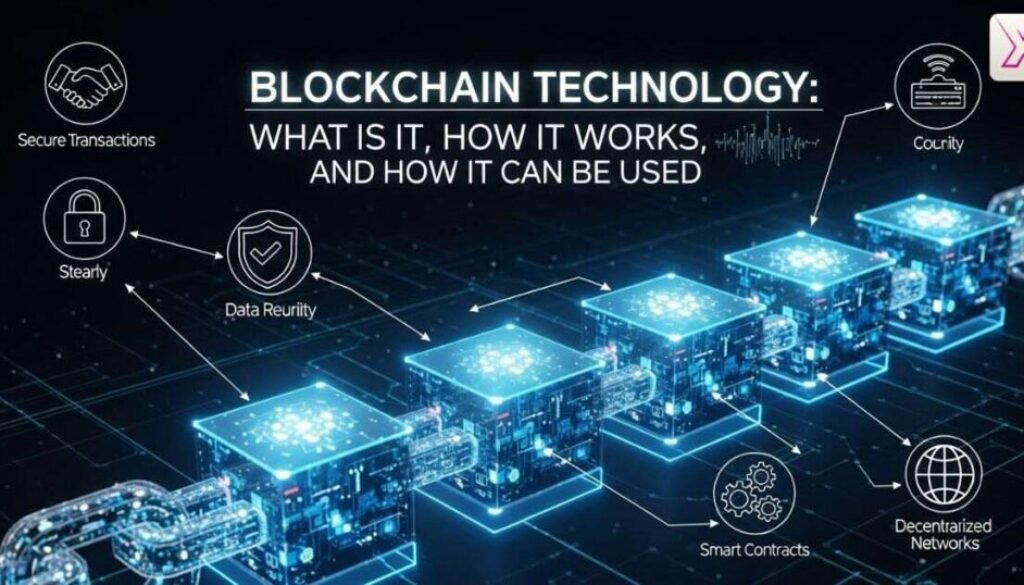
Blockchain Technology: What Is It, How It Works, and How It Can Be Used
Over the past few years, blockchain technology has become one of the most talked-about innovations in the digital world. Many people first hear about it in the context of cryptocurrencies like Bitcoin and Ethereum, but the technology behind it is far more versatile. From finance to supply chains, blockchain technology is changing the way businesses and individuals handle data securely and transparently.
At its core, blockchain technology is a distributed ledger system that allows transactions to be stored safely across a network of computers. This system makes it almost impossible to manipulate, hack, or corrupt data. The transparency, security, and decentralization offered by blockchain technology make it increasingly popular for various applications, beyond just cryptocurrencies.
Understanding how blockchain technology works is essential for anyone interested in modern finance, digital assets, or emerging tech careers. This article will explore what blockchain technology is, how it functions, and how it can be used in real-world scenarios to transform businesses and everyday life.
What Is Blockchain Technology?
Definition and Core Concept
Blockchain technology is a method of recording information in a way that makes it tamper-proof, secure, and decentralized. It is essentially a digital ledger where transactions and data are stored in blocks, which are linked together in a chronological chain. These blocks are distributed across a network of computers, also called nodes, making the system highly resistant to fraud or unauthorized changes.
While most people associate blockchain technology with cryptocurrency, it is much more than just Bitcoin. Ethereum and other platforms allow for decentralized applications (dApps), smart contracts, and tokenization of assets. Businesses now rely on blockchain platforms to improve security, transparency, and efficiency in areas ranging from finance to healthcare.
The core concept of blockchain technology is decentralization. Instead of a single authority controlling the data, multiple participants maintain the distributed ledger, and consensus mechanisms like proof of work and proof of stake validate transactions. This makes blockchain a revolutionary technology for digital transactions and digital assets.
How Blockchain Stores Data Securely
Data security in blockchain technology comes from cryptography and network consensus. Every block contains a hash, a unique digital fingerprint, along with transaction details and metadata. These hashes link blocks together, creating an immutable ledger that cannot be changed without altering all subsequent blocks a near-impossible task in large networks.
In addition, digital signatures authenticate each transaction, ensuring that only authorized users can initiate changes. Combined with the peer-to-peer network system, this creates a highly secure environment. Even in public blockchains, where everyone can access the ledger, security remains intact because blockchain security depends on verification across multiple nodes rather than a central authority.
Simplifying Blockchain with a Shared Digital Ledger
Think of a blockchain platform as a Google spreadsheet shared among many computers. Every participant can view the data, but no one can modify past entries. This transparency fosters trust and reduces the need for intermediaries. Industries such as supply chain blockchain rely on this structure to track products from origin to delivery, ensuring ledger transparency and accountability.
Learn More About: New Digital ID UK Explained: What It Means for Citizens
Why Blockchain Technology Has Become Popular

Problems with Traditional Transactions
Traditional financial transactions often rely on banks or third parties. While convenient, these systems can be slow, costly, and vulnerable to fraud. For instance, cross-border payments can take several days to clear, with fees piling up at each step. This inefficiency and vulnerability paved the way for blockchain technology, which provides faster, cheaper, and more secure alternatives.
Advantages Over Third-Party Systems
With blockchain technology, transactions occur directly between participants in a peer-to-peer network, without needing middlemen. Businesses save time and money, while data integrity improves due to consensus mechanisms. The system is also decentralized, meaning no single authority can manipulate the network. This approach has proven beneficial in finance, logistics, and even healthcare, where accurate, tamper-proof records are critical.
Blockchain vs. Bitcoin: Understanding the Difference
While many people use Bitcoin and blockchain technology interchangeably, they are not the same. Bitcoin is a cryptocurrency that uses blockchain as its underlying infrastructure. Blockchain technology, however, is a platform capable of supporting decentralized applications, smart contracts, and digital assets across multiple industries. This distinction is crucial for businesses and investors exploring blockchain adoption beyond cryptocurrency.
Key Features of Blockchain Technology
Highly Secure Transactions with Digital Signatures
Each transaction in a blockchain uses cryptographic keys to generate a digital signature, which ensures authenticity. Only the user with the corresponding private key can approve a transaction, making blockchain security robust and tamper-proof.
Decentralized System and Its Benefits
In a decentralized blockchain network, power is distributed among network nodes, which collectively validate transactions. This system improves trust, transparency, and resilience. No single point of failure exists, making the network highly reliable compared to traditional centralized databases.
Automation and Smart Contract Capabilities
Smart contracts are self-executing programs that run on blockchain platforms like Ethereum. They automatically enforce rules, release payments, or execute actions once predefined conditions are met. This feature reduces human error, streamlines operations, and enables decentralized applications across industries.
Structure and Design of Blockchain Technology
Understanding Blocks, Hashes, and Metadata
A blockchain consists of sequential blocks containing transaction data, hashes, and metadata. Each block’s hash references the previous block, ensuring data integrity. This design makes the digital ledger immutable and extremely secure.
Block Time, Hard Forks, and Finality
Block time is the duration needed to generate a new block. Hard forks occur when a blockchain protocol changes significantly, creating two chains. Finality ensures transactions cannot be reversed, providing trust and certainty in digital transactions.
Openness, Decentralization, and Public Blockchains
Public blockchains are open for everyone to view and participate in. They promote inclusivity, innovation, and ledger transparency. In contrast, private or permissioned blockchains allow controlled access while maintaining many security benefits.
How Blockchain Technology Works
Cryptographic Keys and Digital Signatures
Users interact with blockchain using a pair of keys: a public key for receiving transactions and a private key for sending. Together, they generate a digital signature, which authenticates the transaction and ensures the immutable ledger remains secure.
Peer-to-Peer Networks and Consensus
Transactions are shared across the peer-to-peer network, where nodes reach a consensus before adding the data to the blockchain. Consensus mechanisms like proof of work (PoW) and proof of stake (PoS) ensure all participants agree on the digital ledger state.
Mining and Proof of Work vs. Proof of Stake
Mining involves solving cryptographic puzzles to validate transactions in PoW systems like Bitcoin. PoS relies on validators staking coins instead of solving puzzles, offering a more energy-efficient approach. Both mechanisms maintain blockchain security and network integrity.
Types of Blockchain Technology
Private Blockchain Networks
Private blockchains are controlled by a single organization. They are ideal for businesses needing security and restricted access while still benefiting from blockchain transparency.
Public and Permissioned Blockchains
Public blockchains, like Bitcoin, allow anyone to participate. Permissioned blockchains restrict access to authorized users, balancing transparency with privacy.
Consortium, Hybrid, and Sidechains
Consortium blockchains are managed by multiple organizations collaboratively. Hybrid blockchains mix public and private features, while sidechains run alongside main chains to improve scalability and enable decentralized applications.
Blockchain Layers and Their Importance
Multiple blockchain layers allow parallel transaction processing, enhancing scalability and efficiency. Examples include the Bitcoin Lightning Network, which speeds up payments without affecting the main blockchain.
Advantages and Disadvantages of Blockchain Technology
Security, Speed, and Transparency
Blockchain technology provides high security via hashing and digital signatures. Transactions are fast, transparent, and auditable, reducing errors and fraud risk.
Scalability Issues and Key Management Challenges
Challenges include limited transaction throughput, energy-intensive mining, and potential loss of private keys. These factors affect usability in large-scale applications.
Balancing Decentralization, Security, and Efficiency
Blockchain developers face the scalability trilemma: balancing decentralization, security, and efficiency. Innovations like layered networks and PoS aim to resolve these trade-offs.
Applications and Use Cases of Blockchain Technology
Finance, Banking, and Cryptocurrencies
Blockchain technology enables instant cross-border payments, cryptocurrencies like Bitcoin and Ethereum, and decentralized finance platforms (DeFi) offering loans, savings, and investments.
Supply Chain, Healthcare, and Identity Management
Supply chain blockchain tracks products from origin to delivery, ensuring ledger transparency. Healthcare uses blockchain for secure patient data, while digital identity solutions protect user information.
Promising Killer Applications and Real-World Examples
Smart contracts, tokenization, and decentralized applications represent “killer apps” for blockchain. Real-world platforms include Hyperledger Fabric, Ethereum dApps, and supply chain networks like Walmart tracking food products.
Investing in Blockchain Technology
Cryptocurrencies, Penny Stocks, and Startups
Investors can buy cryptocurrencies, invest in blockchain startups, or purchase penny stocks of blockchain-based companies. Each has potential for high returns but carries risks.
Traditional Finance vs. Blockchain Investment Strategies
Traditional investments use active or passive approaches, while blockchain investments often focus on digital assets, decentralized platforms, and emerging technologies. Risk management and market research are critical.
Future Opportunities in Blockchain Platforms
Blockchain adoption continues to grow in finance, healthcare, IoT, and supply chains. New platforms and protocols offer opportunities for investors, developers, and enterprises looking to leverage blockchain technology.
The Future and Importance of Blockchain Technology

Blockchain’s Role in Sustainability and Transparency
Blockchain technology can enhance sustainability by tracking product origins and enabling green investments. Transparent digital ledgers discourage unethical practices and improve supply chain accountability.
Transforming Trust, Decentralization, and Digital Transactions
Blockchain reduces reliance on intermediaries and builds trust in peer-to-peer networks. It allows secure, transparent, and decentralized transactions across industries.
Emerging Trends and Career Opportunities in Blockchain
Emerging trends include tokenization, blockchain-as-a-service (BaaS), and interoperability. Careers in blockchain development, architecture, and analysis are in high demand, making blockchain technology a valuable skill for the future.
Conclusion
Blockchain technology is revolutionizing the way we store, share, and secure data. Its distributed ledger system ensures transparency, security, and decentralization, making it valuable beyond cryptocurrency applications. By understanding how blockchain works, you can see its potential in finance, supply chains, healthcare, and digital identity.
Businesses and individuals are adopting blockchain technology for faster, safer, and more transparent transactions. Innovations like smart contracts, tokenization, and decentralized applications highlight its practical use in real-world scenarios. As blockchain adoption grows, the technology will continue shaping digital transformation globally.
For anyone looking to advance their career or explore investment opportunities, mastering blockchain technology is essential. Its future applications in digital assets, sustainability, and decentralized networks make it a critical skill for the coming decade.
Frequently Asked Question
What is the purpose of this technology?
It is a secure digital ledger that records transactions safely. Blockchain technology ensures data cannot be tampered or altered easily.
How are transactions verified?
Transactions are checked by multiple computers in a network. Blockchain technology uses consensus and cryptography for validation and trust.
Can businesses use it outside finance?
Yes, blockchain technology is used in supply chains, healthcare, and identity management for transparency and secure data tracking.
What makes this system secure?
Digital signatures and cryptographic hashes protect data. Blockchain technology creates an immutable record across all connected network nodes.
How does it speed up processes?
Blockchain technology eliminates intermediaries, allowing peer-to-peer transactions. Processes are faster and more efficient than traditional systems.
Are there different types?
Private, public, permissioned, consortium, and hybrid options exist. Blockchain technology can be customized depending on security and accessibility needs.
Is it energy-intensive?
Some versions like proof of work consume more electricity. Blockchain technology now includes efficient alternatives like proof of stake for sustainability.