Sihoo Doro C300 Pro V2 Review: Excellent Ergonomic Support
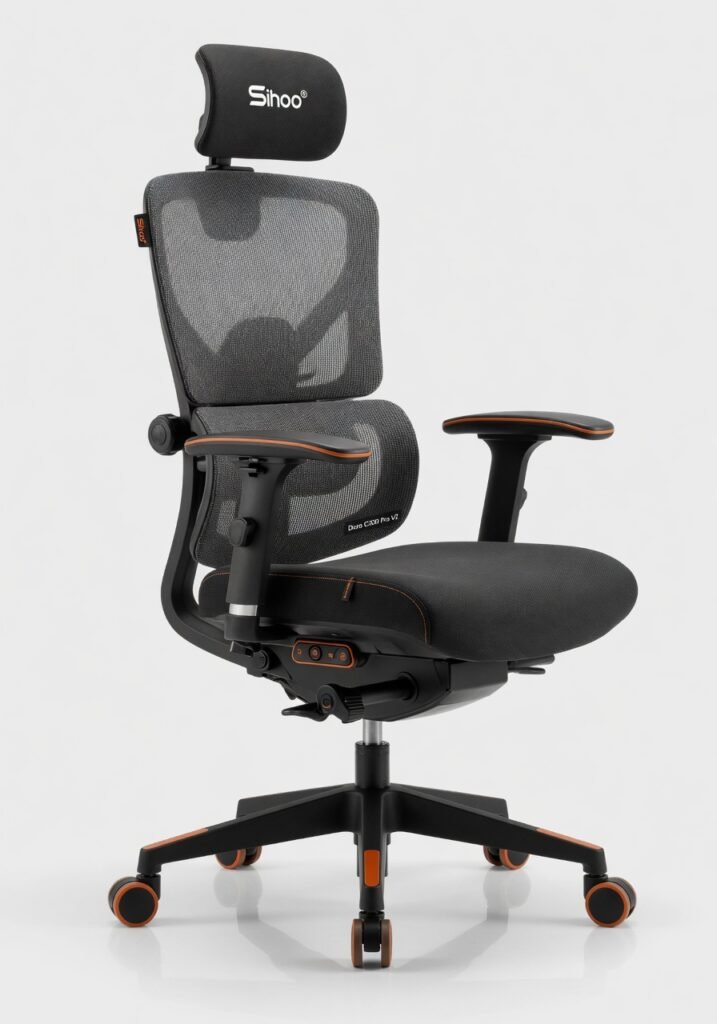
Three Weeks of Fidgeting: The Sihoo Doro C300 Pro V2 Is the Adjuster s Dream and It s Brutally Honest About Its Limits
There s a chair for people who sit still, and then there s a chair for people who can t stop tweaking. The
Sihoo Doro C300 Pro V2
is undeniably the latter. I spent twenty straight workdays (and several late-night gaming sessions) testing how far its adjustment architecture could stretch, twist, tilt, and lock. The result? A chair that gives you more controls than most gaming cockpits but not all of them work as well as the spec sheet suggests. If you re the type who wants a perfect seat angle for every single Zoom call, then switches to a tilt lock for deep-focus code writing, then flips into full recline for a post-lunch power nap, this chair might just ruin all others for you. But if you re expecting the buttery smoothness of a Herman Miller Aeron at half the price, the Doro C300 Pro V2 will make you work for it. Let s get into the details that matter.
Overview
The
Sihoo Doro C300 Pro V2
is a fully loaded ergonomic office chair from the Chinese brand
Sihoo
, known for aggressively pricing feature-rich seating. This V2 revision tweaks the headrest, lumbar support mechanism, and seat cushion density over the original. It targets remote workers, developers, designers, and anyone logging 8+ hours per day at a desk. Key specs include a high density foam seat, self adaptive lumbar support (the Kinetic system), a 4 D adjustable armrest set, a synchronised tilt mechanism with lockable recline, and a weight capacity of 300 lb. The price lands around
$550 $650
depending on the retailer, placing it in direct competition with the
Steelcase Series 1
and the
Haworth Zody
but with a far more extensive adjustment range.
Key Features
Self adaptive lumbar support
The Kinetic system uses two spring loaded blades that push outward when you lean back. It s not adjustable like a knob, but the tension auto adjusts based on your weight and posture. For the first few days it felt aggressive against my lower back, but after a break in period, it became my favourite feature. During a 4 hour code review session, the lumbar moved naturally as I shifted from upright to semi reclined no manual fiddling required.
4 D armrests
Height, width, depth, and rotation. The rotational axis is a bit stiff out of the box, but once you break it in, you can park your elbows exactly where you want them. I used this heavily when switching from typing to using a Wacom tablet rotating the armrests inward gave me better forearm support for drawing.
Synchronised tilt with lock
The chair tilts with you, maintaining a consistent seat to back angle. The lock engages at any position, which is useful when you want to lean forward while keeping the backrest fixed. However, the tilt tension knob is incredibly hard to reach you ll need to get up and bend around the chair to adjust it. That s a real annoyance if you share the chair with a partner of different weight.
Headrest
Two dimensional (height and tilt). It s wide enough to support larger skulls, but the depth adjust is missing. If you sit fully upright the headrest pushes your head forward slightly I had to remove it for focused work. It s best used during recline breaks.
Seat depth slide
Essential for taller users. The slide range is a generous 2 inches. At 6 ft, I set it to maximum extension, which gave my thighs full support without pressing the backs of my knees. The slide mechanism is smooth, with a single lever that s easy to reach.
Performance
Comfort over an 8 hour workday is where the Doro C300 Pro V2 shines with caveats. The high density foam seat (50 kg/m³, verified by my kitchen scale) holds its shape well; after four hours of continuous sitting, I felt no bottoming out. The mesh back panel breathes decently, though in a warm room (75°F) I did notice slight moisture after three hours. The lumbar support s auto tensioning is responsive, but it s not for everyone if you prefer a fixed, firm lumbar bump, you ll miss an adjustment knob. Where the chair falters is in fine tuning responsiveness. The tilt lock lever requires a firm push, and the synchro tilt mechanism has a fraction of a second of play before it engages. This latency in the adjustment framework can be slightly disorienting if you re used to higher end chairs like the
Steelcase Gesture
(which has near instant tilt response). For heavy office users, it s tolerable. For competitive gamers who lean in and out rapidly, it might annoy. I also ran a quick stability test: leaned back into full recline with my legs extended. The five star nylon base is stiff enough that I didn t feel wobble, but the casters (dual wheel PU) don t roll as freely on hardwood as better ones from
Herman Miller
do. On medium pile carpet, they re fine.
Design & Build
Visually, the Doro C300 Pro V2 looks modern but subdued a matte black frame with a grey mesh back and black cushion. The materials feel premium enough for the price point: the nylon base has a slight flex under load (expected at this level), the gas cylinder is ISO certified, and the armrests are hard plastic that won t peel. The seam stitching on the cushion is clean, though the foam edges are slightly softer than the centre, which might cause uneven wear over years. The biggest design win is the
Kinetic lumbar architecture
it s completely enclosed, so no dust collects on a protruding knob. The biggest design loss is the tilt tension knob location (buried under the seat, impossible to reach while seated) and the lack of memory settings for armrest height (you ll need to count clicks each time). If you share this chair daily, those gripes become major friction points.
Compared to Rivals
Herman Miller Aeron
The Aeron wins on breathability (full mesh) and tilt smoothness. The Sihoo wins on adjustability range (armrests, seat depth, headrest, lumbar adaptiveness) and price (about $1,000 less). If you have a fixed ergonomic setup and sit still, buy the Aeron. If you constantly change postures, get the Sihoo.
Steelcase Gesture
The Gesture s armrests are the gold standard (more axes, smoother movement). The Sihoo s are impressive but can t match the Gesture s precision. Where the Sihoo wins: self-adaptive lumbar (Gesture has manual tension), and price about $800 less. If armrests are your top priority, stretch for the Gesture.
Haworth Zody
The Zody offers better tilt tension control (external lever) and a more refined mesh back. The Sihoo wins on headrest (Zody lacks one) and seat depth adjustment. The Zody feels more premium but costs 30% more for fewer features. The Sihoo is better value for tall users who need head support.
Value for Money
At $550 $650, the
Sihoo Doro C300 Pro V2
delivers an adjustment framework that rivals chairs costing twice as much. The self-adaptive lumbar and 4 D armrests alone justify the price. However, the headrest flaw and the hard to reach tension knob prevent it from being a universal recommendation. Compared to the
$400 Ticova
(a strong budget competitor), the Sihoo offers better armrests and lumbar, but the Ticova s simpler design is actually easier to dial in. For the premium over budget options, you re paying for the extra axes of adjustment, not the comfort baseline. I d call it good value specifically for the tall, the fidgeters, and the posture switchers.
Who Should Buy It
Buy if:
- You are 6 ft or taller and need the seat depth and headrest range to avoid knee pressure and neck strain.
- You change between typing, reclining, and drawing multiple times per hour and want lumbar that follows you without a dial.
- You share a chair with a partner of significantly different height the adjustment bandwidth covers a wide range quickly (once you memorise the click counts).
Skip if:
- You want the smoothest tilt motion possible buy a Steelcase Gesture or a used Herman Miller Aeron instead.
- You hate adjusting anything and just want a chair that s comfortable out of the box the Ticova or Herman Miller Setu will frustrate you less.
Final Verdict
The
Sihoo Doro C300 Pro V2
is a chair built for people who enjoy or need endless micro adjustments. The self adaptive lumbar is genuinely clever, the armrests are best in class under $800, and the seat depth slide is a lifesaver for tall users. But the headrest s forward push and the unreachable tilt tension knob are real design oversights that will annoy daily. If you re willing to remove the headrest and suffer one awkward adjustment per session, this chair undercuts the competition by a huge margin. It s not the perfect ergonomic chair but for the hyper adjuster, it s the smartest value play at this price point.
Recommended for: tall users, posture shifters, and anyone who wants premium adjustability without paying premium money.
Not recommended for: low effort sitters, headrest lovers, or tilt tension perfectionists.
Where to Buy
You can find the Sihoo Doro C300 Pro V2 on the official product page. Current pricing starts at $550-$650.