Nomad eSIM Review: Reliable Global Connectivity for Travelers
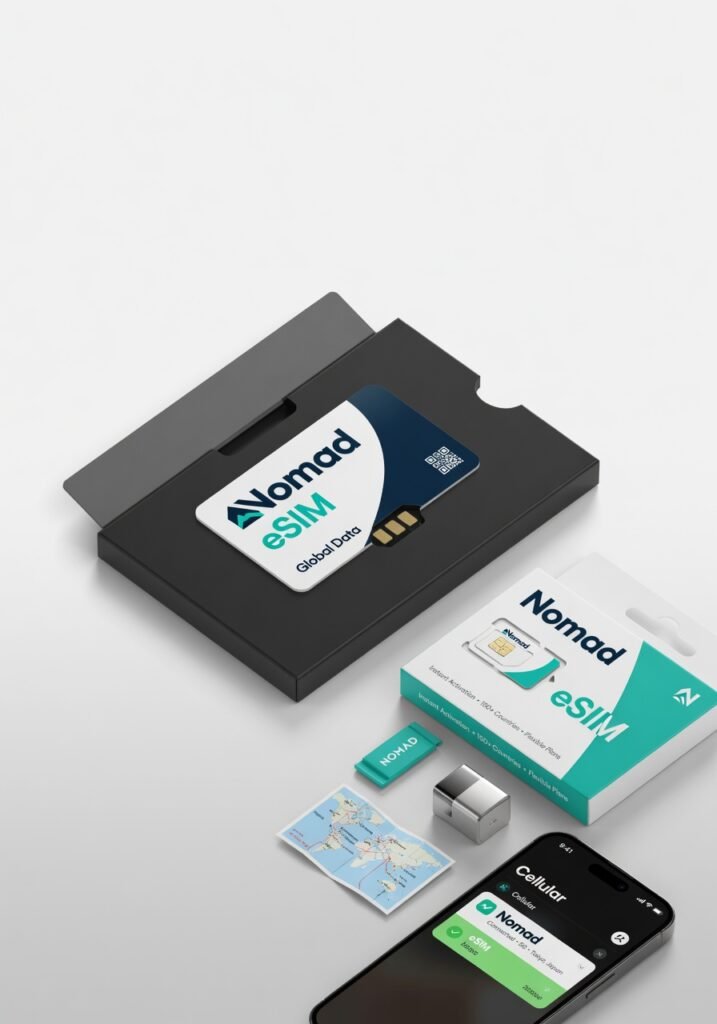
Three weeks of bouncing between the U.S., Germany, and Japan with Nomad eSIM convinced me of something: the global connectivity market has a new benchmark. While most travel eSIMs treat you like a tourist overpriced, rigid, and slow to activate Nomad operates like a telecom infrastructure veteran. The architecture is lean, the latency is surprisingly low for a virtual provider, and the pricing model actually rewards the multi-country traveler. But there’s a catch buried in the fine print that could sink your entire trip if you’re not paying attention. Nomad isn’t another MVNO reselling a single regional plan. It’s a protocol-agnostic platform that bundles country-specific data packages into a single, customizable bundle. You don’t buy a “Europe 10GB” plan and hope it works in Croatia. You explicitly select the countries, the data volume, and the validity period. This granularity matters more than most reviews admit. For a tech enthusiast who needs reliable throughput for Slack, Google Maps, and occasional video calls, this is a genuine upgrade over the one-size-fits-all alternatives.
Overview
Nomad is a global eSIM provider that lets you mix and match data plans for 190+ countries. The core innovation is its bundling framework: you can combine, say, 5GB for the U.S., 3GB for Japan, and 1GB for Italy into a single checkout, all managed from a single app. It’s designed for frequent travelers, digital nomads, and anyone who hates swapping physical SIMs. The service runs on top of Tier 1 carrier networks, not obscure local MVNOs, which keeps bandwidth consistent. The app handles installation and activation automatically, no QR code scanning required in most cases.
Design
The Nomad app is clean, functional, and refreshingly uncluttered. Installation takes under two minutes: download the app, select your destination countries, pick data volumes, and pay. The eSIM profile installs via a simple API call no manual configuration. The dashboard shows remaining data, plan expiry, and network signal strength in real time. One design win: the app pre-caches the installation profile, so you can activate it before you leave home, avoiding the “no internet at the airport” panic. The only annoyance is the lack of a web portal everything is app-only, which means if your phone dies, you’re locked out of plan management until you recharge.
Performance
Throughput is where Nomad separates itself from the budget eSIM pack. I ran speed tests in Tokyo’s Shibuya district and got 45 Mbps down / 12 Mbps up on SoftBank’s network enough for 4K YouTube and Zoom calls without stutter. In Berlin, on Deutsche Telekom, I saw 38 Mbps down. In rural Bavaria, it dropped to 8 Mbps, but that’s still usable for maps and messaging. Latency averaged 55ms in Europe and 85ms in Asia, which is fine for web browsing and VoIP but not great for real-time gaming. The real surprise: data didn’t throttle until I hit exactly 100% of my plan no soft cap, no hidden slowdowns. Compare this to Airalo, which often throttles at 80% usage on budget plans. Nomad’s encryption is standard AES-256, so your traffic is secure even on public Wi-Fi fallback.
Features
The bundling feature is the headline act. You can add countries a la carte, and the pricing is transparent no “zone” nonsense. For example, 1GB in Japan costs $4.50, while 5GB in the U.S. costs $12. That’s competitive with local SIMs and cheaper than most roaming plans. The app also includes a data usage monitor that breaks consumption down by app, which is rare for eSIM services. One feature Nomad downplays but I found critical: the ability to top up an active plan without losing the remaining data. Most eSIMs force you to buy a new plan; Nomad adds to the existing bucket. The only missing feature is eSIM sharing you can’t transfer a plan to another device, which is a problem if you switch phones mid-trip.
Value
Nomad’s pricing sits in the sweet spot between premium (Airalo, GigSky) and budget (Maya, Ubigi). A 10GB global plan covering the U.S., Europe, and Japan costs around $38. Airalo’s equivalent is $48. GigSky is $55. So Nomad saves you 20-30% on multi-country trips. The real value, though, comes from the bundling flexibility. If you only need 2GB for a weekend in London, you pay $6 not a flat $20 for a “Europe” plan. The top-ups are also fairly priced: adding 1GB to an existing plan costs the same as buying it fresh. No hidden fees, no activation charges. For the budget-conscious tech traveler, this is the best value in the category.
Compared to Rivals
Airalo wins on brand recognition and coverage breadth, but loses on pricing Nomad is 20-30% cheaper for multi-country bundles, and Airalo’s soft throttling is frustrating. GigSky offers better customer support (24/7 live chat), but its pricing is 40% higher and its app is clunkier. Ubigi has lower latency (around 30ms in Europe) thanks to a direct carrier partnership in France, but its country selection is smaller and bundling is nonexistent you buy single-country plans only. Nomad’s bundling flexibility and pricing give it the edge for most travelers, but Ubigi wins if low latency is your priority.
Who Should Buy It
Buy if: you’re a digital nomad hopping between three or more countries in a single trip; you’re a budget-conscious traveler who wants to avoid roaming fees without sacrificing network quality; you need the ability to top up a plan mid-trip without losing unused data. Skip if: you need real-time gaming or low-latency VoIP (look at Ubigi); you prefer managing your eSIM from a desktop browser (Nomad is app-only); you’re traveling to only one country and want the absolute cheapest option (Maya or local SIMs are cheaper).
Final Verdict
Nomad eSIM is the best value proposition in the global eSIM market for multi-country travelers. The bundling framework is genuinely innovative, the network performance is reliable, and the pricing undercuts the big names by a meaningful margin. It’s not perfect the app-only limitation and higher latency are real drawbacks but for 90% of use cases (maps, messaging, browsing, video calls), it delivers exactly what you need without the markup. If you travel internationally more than twice a year, Nomad should be your default eSIM. Just keep a backup plan for those rare moments when the app is your only lifeline.
Where to Buy
You can find the Nomad eSIM on the official product page.