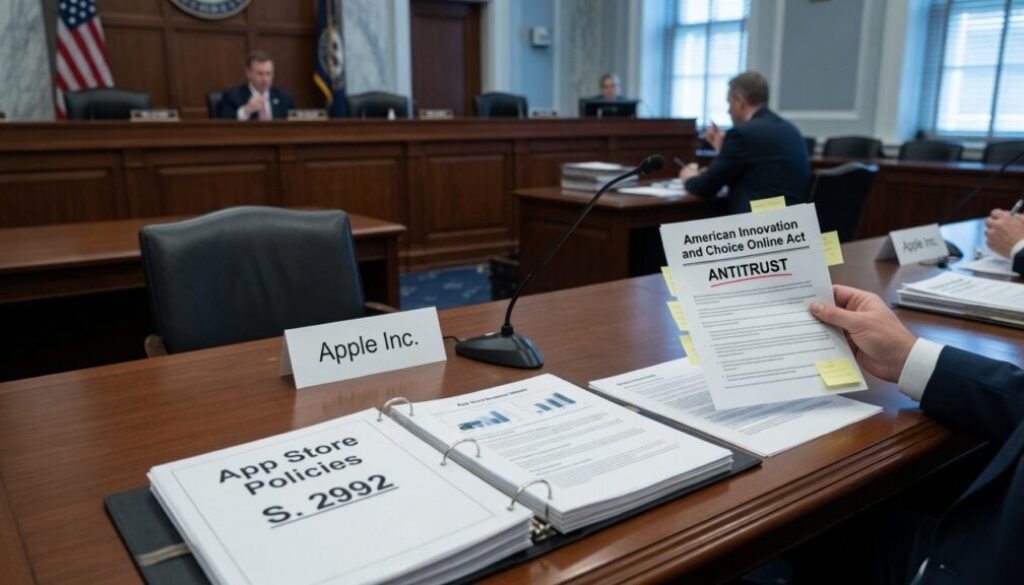
Apple Criticizes U.S. Antitrust Bill That Targets the App Store
Apple has issued a sharp rebuke against a newly reintroduced U.S. antitrust bill that could compel the company to open its App Store to third‑party marketplaces and sideloaded applications. The American Innovation and Choice Online Act (AICOA), reintroduced by Senators Chuck Grassley and Amy Klobuchar in June 2026, targets dominant digital platforms with the goal of lowering prices and expanding consumer choice. Apple’s emphatic criticism frames the legislation as a direct threat to the security and privacy safeguards that define its tightly controlled iOS ecosystem.
Understanding the AICOA and Its Key Provisions
The American Innovation and Choice Online Act is designed to prevent large technology companies from giving their own products and services preferential treatment over competitors. To fall under its scope, a platform must have a market capitalization exceeding $550 billion and serve a critical mass of U.S. users. The bill’s core provisions prohibit self‑preferencing in search rankings, require data portability, and mandate that gatekeepers allow alternative app stores and sideloading of software. Supporters argue that these rules would dismantle walled gardens that stifle innovation and inflate consumer costs. The bipartisan backing from Senators Grassley and Klobuchar reflects a growing appetite in Washington to confront the market power of Apple, Google, Amazon, and Meta. While similar versions stalled in previous Congresses, the 2026 reintroduction signals a renewed legislative push. For Apple, the most disruptive element is the requirement to open iOS to app marketplaces beyond its own curated App Store.
Apple’s Core Objections to Forced App Store Changes
Apple’s defense rests on the premise that the App Store’s role as a curated, secure hub for iOS applications is inseparable from the iPhone’s value proposition. The company warns that mandating sideloading and third‑party stores would erode the integrated security model that has kept iOS largely free from the malware epidemics seen on more open platforms.
In a statement responding to the reintroduced bill, Apple argued that AICOA would “force iPhone to become like Android—a fragmented ecosystem where users must navigate untrusted download sources and developers face a patchwork of varied store policies.” The company emphasized that its review process, app‑tracking transparency, and privacy nutrition labels are only possible because distribution flows through a single, tightly managed channel. Stripping away that control, Apple contends, would hand a “bonanza for bad actors” seeking to harvest personal data or distribute counterfeit apps.
Security and Privacy at the Center of the Debate
The security argument is Apple’s strongest rhetorical weapon. By vetting every app and update, the App Store blocks an estimated $1.5 billion in fraudulent transactions annually and rejects thousands of apps that violate privacy guidelines. Apple points to research showing that sideloaded apps on competing platforms are responsible for a disproportionate share of mobile malware incidents. Industry analysis supports the claim that a mandate to permit alternative app installations without equivalent safeguards would lower the barrier for cybercriminals. Critics counter that Apple weaponizes privacy rhetoric to protect its 15–30 percent commission on digital sales. They note that the company could still provide strong security tools even if users could install apps from other sources—much as macOS allows software from outside the Mac App Store while offering Gatekeeper protections. But Apple insists that the unique nature of a mobile device, which carries sensitive health, financial, and location data, demands a zero‑trust distribution model that cannot coexist with sideloading.
Economic Consequences for Developers and Consumers
The bill’s proponents assert that opening the App Store would finally inject price competition into the mobile app economy. Today, developers of apps like Spotify or Netflix must either absorb Apple’s commission or raise prices for consumers. Alternative payment systems and third‑party stores could reduce the “Apple tax,” potentially saving consumers hundreds of millions of dollars per year on subscriptions and in‑app purchases. However, Apple maintains that the current system has enabled a $1.1 trillion developer ecosystem, most of it powered by small businesses that pay no commission at all. The company argues that the sudden fragmentation of distribution would force developers to manage multiple storefronts, increasing compliance costs and diluting the trust that users place in app downloads. The easy integration of hardware and software that Apple users value—from device‑level payments to health data sync—could become far harder to guarantee if apps originate from unverified sources.
The Broader Antitrust Landscape and Global Pressures
Apple’s battle in Washington is only one front in a global war over app store governance. The European Union’s Digital Markets Act already designates iOS and the App Store as core platform services, compelling Apple to allow sideloading and third‑party marketplaces in the EU. South Korea and Japan have passed similar laws targeting in‑app payment monopolies. While Apple has grudgingly adapted to EU rules by introducing a “Notarization” system for external apps, it continues to argue that the security trade‑offs are unacceptable for users elsewhere. In the United States, the reintroduction of AICOA aligns with broader antitrust scrutiny from the Department of Justice and the Federal Trade Commission. A ruling in the Epic Games v. Apple trial already forced modest changes to in‑app purchase steering, but AICOA goes much further. If passed, the U.S. would join the EU in reshaping the mobile platform business model, forcing Apple to reconcile its global product vision with divergent regulatory demands.
What This Means for Apple Users and the Future of the App Store
For everyday iPhone owners, the passage of AICOA would introduce visible changes. A new “Allow App Installation From” menu akin to Android’s settings could appear in iOS, accompanied by Apple‑branded warnings about security risks. Alternative app stores such as the Microsoft Store, Epic Games Store, or entirely new marketplaces might become available for download—each with its own selection of apps and often lower prices. Yet the transition would likely be gradual. Apple retains considerable technical levers to discourage sideloading, and many users may stick with the familiar App Store out of habit and trust. The company could also implement mandatory app review for all iOS software regardless of source, preserving a layer of protection while complying with the law’s interoperability mandates. Key Takeaways
- AICOA targets dominant platforms with market caps over $550 billion, forcing them to allow alternative app stores and sideloading.
- Apple argues the bill would severely weaken iOS security and privacy, making iPhones more vulnerable to malware.
- Proponents believe the legislation would lower app prices and foster innovation by breaking down monopolistic distribution.
- Global regulatory trends, especially the EU’s Digital Markets Act, are already pressuring Apple to open its ecosystem.
- Consumers may eventually see more app choices and lower costs, though at a potential decrease in the smooth, protected experience Apple currently delivers.
Conclusion
The reintroduced American Innovation and Choice Online Act sets the stage for a defining clash between Apple’s integrated privacy philosophy and a bipartisan push to rein in Big Tech market power. While Apple’s criticism spotlights genuine security concerns that millions of users rely on, policymakers contend that no single company should be the sole arbiter of what software runs on a billion devices. As the legislative process unfolds, the outcome will not only determine the future of the App Store but also set a precedent for how digital markets balance competition with consumer protection in an increasingly connected world. Staying informed about these regulatory shifts is essential for developers, investors, and anyone who carries a smartphone.