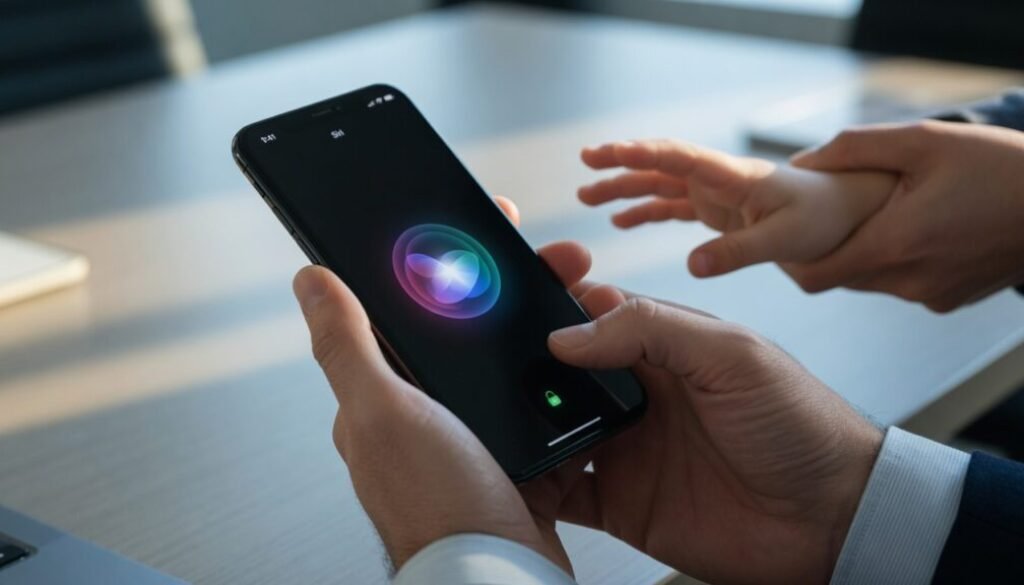
Why Apple Refuses to Turn Siri Into an AI Companion
As artificial intelligence becomes more intertwined with daily routines, many tech companies are racing to build digital companions that offer emotional connection. Not Apple. In a stark departure from the industry trend, Craig Federighi, Apple’s senior vice president of software engineering, recently clarified that Siri is engineered as a functional utility, not a virtual partner. During a wide-ranging interview following the introducing of iOS 27, Federighi and marketing chief Greg Joswiak emphasized that Apple deliberately avoided designing any “AI girlfriend or boyfriend” experience. The statement underscores a philosophy that prioritizes task completion, privacy, and clear boundaries over simulated intimacy.
Apple’s AI Philosophy: Utility Over Emotional Bonds
Unlike competitors who market chatbots as empathetic confidants, Apple frames its machine learning tools as invisible assistants. Siri can send a message, set timers, or pull up a document, but it refuses to provide the flirty banter or long-term “memory” of personal preferences that would make it emotionally sticky. According to Federighi, that choice is intentional. Apple’s research focuses on on-device intelligence that processes requests quickly and disappears, never storing a persistent personality profile designed to foster attachment. This stance aligns with the company’s longstanding user-first privacy narrative. By keeping Siri’s interactions transactional, Apple reduces the risk of emotional manipulation or data exploitation. The assistant may eventually sound more natural and understand conversational context better thanks to iOS 27 enhancements, but it still won’t ask about your day or remember past heartbreaks. Federighi noted that Apple wants users to see Siri as a tool—closer to a calculator than a confidant.
The Intentional Limitations of Siri’s Personality
Apple’s design teams debated extensively about how much “personality” to infuse into Siri. The latest update brings a more expressive voice and improved follow-up question handling, yet the assistant deliberately holds back from role-playing or pretending to have feelings. Every response is generated to serve a specific user goal, not to build rapport over time. Developers working on third-party AI apps distributed through the App Store’s secure ecosystem must also comply with that ethos. Apple’s App Review guidelines now explicitly limit apps that create “AI companion” relationships intended to simulate genuine human connection, especially when those apps target vulnerable populations. The policy reflects a growing recognition that emotionally aware AI can blur boundaries and sometimes cause psychological harm.
Child Safety and Ethical Guardrails
Concern for younger users heavily influenced these guardrails. As part of the same interview, Apple’s executives discussed new child safety protections that extend beyond AI. Federighi pointed to research indicating that children, and even some adults, can develop unhealthy dependencies on chatbots that mimic affection. Apple’s approach is to remove the possibility entirely rather than rely on parental controls that might fail. This protective instinct shows up in small, deliberate design choices. When a user tries to steer Siri toward romantic or overly personal territory, the assistant pivots back to a functional offer—searching the web, playing music, or offering a joke that is clearly scripted. The company wants no ambiguity about what Siri is and isn’t capable of feeling.
Industry-Wide Shift Toward AI Companions
Apple’s restraint stands in sharp contrast to a wider market that is embracing AI companionship. Several startups now offer apps designed to be virtual friends, mentors, or romantic partners, and their user bases are growing rapidly. A growing body of agent-based AI research suggests that anthropomorphizing digital assistants can increase engagement, but it also raises ethical questions about informed consent and emotional dependency. Meanwhile, dedicated AI companion platforms boast features like long-term memory, customizable personalities, and even visual avatars that simulate presence. Apple’s executives are aware of this trend but remain unconvinced that deeper emotional simulation leads to better outcomes for users. Federighi remarked that the most responsible path is to build the world’s most competent assistant, not the most charming one.
How Apple Enforces Its Vision Through Hardware Integration
The company’s tight hardware-software integration gives it unique enforcement power. Siri’s on-device neural processing, alongside the Unified Wallpaper approach that creates a cohesive visual identity across iPhone, iPad, and Mac, allows Apple to control the entire experience pipeline. For example, the visual consistency across iOS 27 and macOS mirrors the functional consistency of Siri—every interaction feels predictably Apple, without unexpected emotional outbursts. By running the large language model locally on Apple Silicon, sensitive requests never leave the device, making it technically impossible to farm out emotional profiling to the cloud. Even with such local intelligence, Siri’s system prompt does not include any directive to build rapport. Apple’s published machine learning research consistently highlights practical use cases like accessibility improvements and workflow automation, underscoring a corporate culture that sees AI as an augmentation tool rather than a partner substitute.
Practical Takeaways for Users Evaluating AI Assistants
For anyone handling the growing landscape of AI helpers, Apple’s decision offers a clear benchmark. A utility-first assistant can be judged on speed, accuracy, and easy integration into daily tasks—not on its ability to ease loneliness. Users should consider asking several questions when adopting any AI tool:
- Does this assistant remember personal details beyond what’s needed for the task? If so, evaluate whether that data is stored securely or used to build a psychological profile.
- Can I accomplish my goal without emotionally charged interactions? Many highly productive workflows require zero social chatter.
- What are the platform’s stated ethical boundaries? Transparent companies publish clear policies on relationships, consent, and age restrictions.
Apple’s approach also serves as a reminder that the most effective AI is often the least noticeable. A Siri that quickly sets a reminder and disappears respects a user’s time and autonomy far more than a companion bot that lingers and seeks engagement.
What This Means for the Future of Digital Assistants
As industry watchers examine the divergence between Apple and the broader AI companion market, a few predictions emerge. Utility-focused assistants are likely to dominate enterprise and professional settings, where emotional connection adds no value. Consumer assistants may split into two categories: transactional tools like Siri and Google Assistant, and companion-based services that explicitly market empathy and support. Apple’s firm “no” to the AI girlfriend concept could also influence regulatory conversations. If major platform holders reject synthetic emotional relationships by design, lawmakers may feel less pressure to restrict the technology through blunt legislation. Instead, market self-regulation could set a de facto standard that encourages utility features while discouraging emotional mimicry. The decision also benefits developers who want to build serious productivity applications on Apple platforms. They can rely on Siri’s new App Intents framework to perform complex multi-step tasks without worrying about entangled emotional states or unpredictable chatbot behavior. Ultimately, Federighi’s statement reinforces a simple but effective idea: technology should serve people on their terms, not on the technology’s terms. An assistant asked to dim the lights shouldn’t follow up with a question about childhood memories. By keeping Siri clearly utilitarian, Apple draws a boundary that many users didn’t realize they needed—until they saw the alternative. The absence of an AI girlfriend might be the most human-centered design decision of all.